

MaghreBats Completes Successful First Scientific Expedition Across Morocco
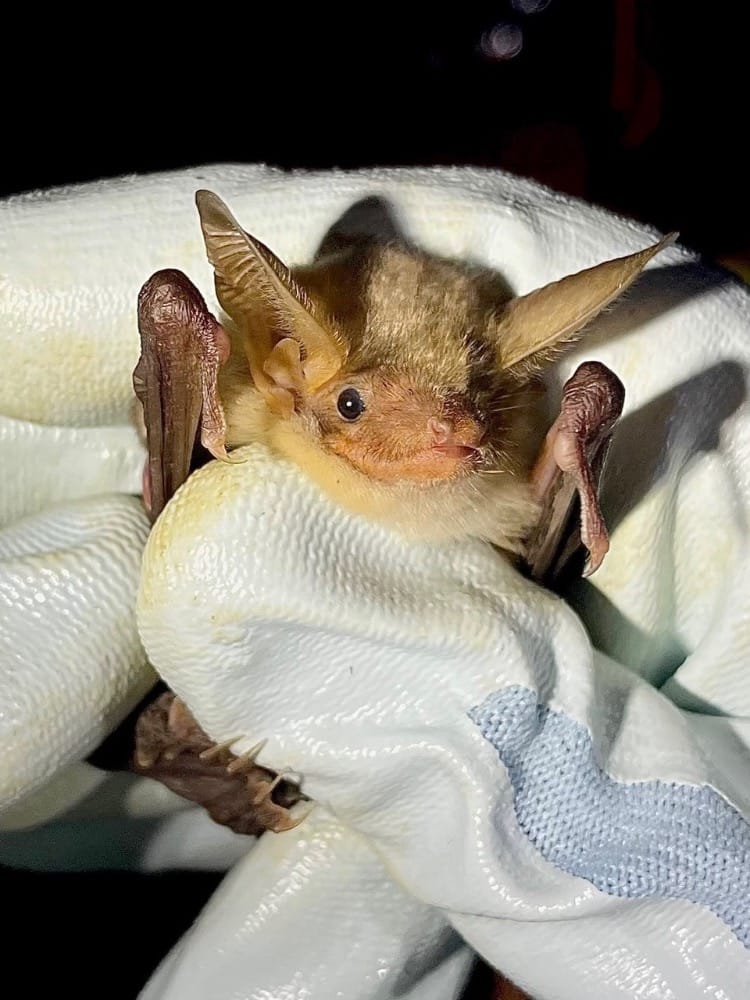
From the High Atlas Mountains to the Sahara Desert, the expedition highlights Morocco’s enormous scientific potential and its importance for bat conservation on both sides of the Strait of Gibraltar.
MaghreBats, an international scientific research initiative led by the Gibraltar National Museum in collaboration with Cadi Ayyad University in Marrakech, has successfully completed its inaugural two-week expedition across Morocco.
The expedition brought together 10 specialist researchers from Gibraltar, Morocco, Spain and the United Kingdom, undertaking scientific fieldwork across extraordinary landscapes ranging from the High Atlas Mountains to the Sahara Desert.
The team recorded a variety of bat species, including several of particular scientific interest, such as the western barbastelle (Barbastella barbastellus), the Maghrebian mouse-eared bat (Myotis) and Gaisler’s long-eared bat (Plecotus gaisleri). These encounters have reinforced the enormous potential for further scientific discoveries in Morocco.
Founded and directed by Dr Stewart Finlayson of the Gibraltar National Museum, MaghreBats builds upon more than a decade of bat research in Gibraltar through the Gib-Bats project. Previous studies have demonstrated bat movements between Gibraltar and other parts of the Iberian Peninsula, including Portugal, raising important questions about possible connections with North African populations.
Dr Finlayson explained:
“This expedition has been enormously exciting and has demonstrated just how much scientific potential exists in Morocco. What happens to bat populations there could have important consequences for populations in southern Iberia, including Gibraltar. We cannot hope to understand our own bats fully without investigating what is happening on the other side of the Strait.”
The expedition was not without challenges, with the team encountering difficult terrain, thunderstorms, hail and flooding in remote mountain regions. Nevertheless, the researchers adapted to the demanding conditions and successfully continued their scientific investigations.
A particularly encouraging aspect was the participation of two young Gibraltar National Museum trainees, Chantal and Stephanie Kassam, who demonstrated exceptional enthusiasm, determination and resilience throughout the expedition.
Dr Finlayson commented:
“I am particularly proud of Chantal and Stephanie. This was a demanding expedition, even for experienced researchers, yet they kept up with everything it threw at them. Both have tremendous potential in this field, and I hope this will be the first of many scientific expeditions for them.”
Beyond scientific discovery, conservation is a central responsibility of MaghreBats. As part of its scientific research licence issued by Morocco’s Agence Nationale des Eaux et Forêts (ANEF), based in Rabat, the project will advise the Moroccan authorities on important bat habitats and sites that merit protection, helping to safeguard the country’s natural heritage for future generations.
Working closely with Moroccan Project Co-Director Dr Youssef Dbiba, the initiative aims to establish a lasting international research programme, strengthen scientific collaboration, develop young researchers and contribute directly to bat conservation.
“Our ambition is to build something that lasts,” Dr Finlayson added. “This is not simply about undertaking expeditions and recording species. It is about developing scientific knowledge, supporting conservation and ensuring that future generations inherit the extraordinary natural heritage we are privileged to study.”
A second MaghreBats expedition is already scheduled for late November and early December 2026, continuing this ambitious programme of scientific exploration and international collaboration.
The Minister for Heritage, the Environment and Relations with Morocco, Professor John Cortes, said:
“I congratulate Stewart, Dr Dbiba and the whole team on a very successful first expedition. The Strait of Gibraltar is a link for wildlife as much as a barrier, and we cannot protect our own bats without understanding what is happening to them in North Africa. It is excellent to see the Gibraltar National Museum leading this work with our Moroccan colleagues, and particularly pleasing that two young Gibraltarians have gained field experience of this standard so early in their careers. I look forward to the results of the next expedition.”